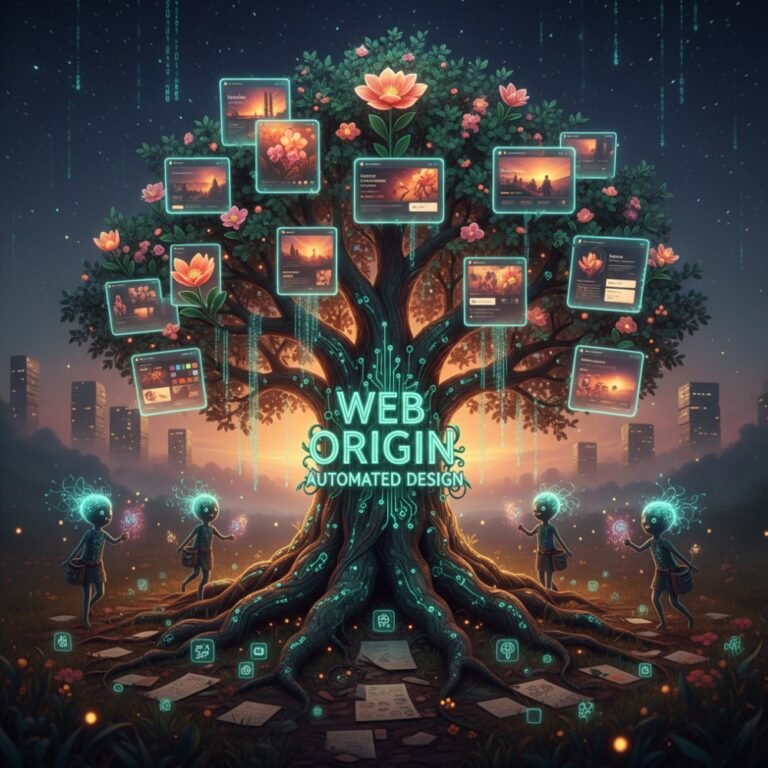
Imagine logging into your favourite e-commerce site, only to find the homepage reshuffled overnight – product recommendations tailored not just to your past clicks, but to your mood inferred from recent browsing patterns. The layout shifts seamlessly on your mobile, fonts adjust for readability in dim light, and even the colour scheme warms up if it’s a chilly autumn evening. No developer lifted a finger. This isn’t science fiction; it’s the dawn of self-evolving websites, where the digital front door learns, adapts, and thrives like a living organism.
In a world where user attention spans flicker like faulty bulbs – averaging just eight seconds – static websites feel as outdated as flip phones. Enter self-evolving websites: intelligent platforms powered by artificial intelligence (AI) and machine learning that continuously refine themselves based on real-time data. They’re not just responsive; they’re anticipatory, predicting needs before you voice them.
As we hurtle towards 2025 and beyond, this shift promises to redefine web development. Businesses that embrace adaptive web design won’t just survive; they’ll captivate. In this guide, we’ll unpack what self-evolving websites truly mean, how they tick, and why they’re the next big leap in creating dynamic user experiences. Whether you’re a developer eyeing the future or a marketer hungry for engagement boosts, buckle up – the web is about to get a whole lot smarter.
What Are Self-Evolving Websites?
At its core, a self-evolving website is a digital ecosystem that autonomously improves over time. Unlike traditional sites built on rigid templates, these platforms use AI to analyse interactions, learn from patterns, and evolve their structure, content, and functionality without constant human intervention.
Think of it as Darwin meets the digital age: survival of the fittest interface. The concept hinges on adaptability and learning, drawing from machine learning in web development to mimic biological evolution. Websites “evolve” by testing variations, retaining what works, and discarding the rest – all in pursuit of peak performance.
The Concept of Adaptability and Learning in Modern Websites
Modern websites have long moved beyond static HTML pages. Responsive design was the first step, ensuring sites flexed across devices. Then came dynamic content, pulled from databases for freshness. But self-evolving takes it further: it’s about proactive intelligence.
Here, adaptability means the site reshapes itself in response to triggers like user demographics, traffic spikes, or seasonal trends. Learning? That’s the magic of algorithms that study anonymised data – click-through rates, bounce times, scroll depths – to refine future visits.
For instance, a travel blog might notice UK readers favouring eco-friendly getaways in October. Overnight, it prioritises green itineraries, swaps stock images for autumnal vistas, and even tweaks headlines to evoke cosy firesides. This isn’t random; it’s a calculated evolution towards relevance.
Why This Is the Next Big Shift in Web Development
Web development has evolved in waves: from hand-coded sites in the ’90s to no-code builders today. But the pace of change? It’s exploding. With over 1.1 billion websites vying for attention, standing still means sinking.
Self-evolving sites address this head-on. They slash maintenance time by 40-60% through automation, according to industry benchmarks, freeing teams for innovation. More crucially, they deliver hyper-personalised experiences that boost retention – think Netflix-level engagement on your corporate landing page.
In an era of AI-driven websites, this shift isn’t optional. It’s the bridge from passive tools to active partners, turning sites into revenue-generating assets that grow with your audience. Developers ignoring it risk obsolescence; adopters? They’ll lead the pack in evolutionary web architecture.
How Self-Evolving Websites Work
Ever wondered how your streaming app “just knows” what you’ll binge next? Self-evolving websites operate on similar principles: a symphony of data, AI, and swift adjustments. Let’s break it down.
The Role of AI, Machine Learning, and Automation
AI is the brain, machine learning the memory, and automation the hands. AI processes vast datasets to spot patterns humans might miss. Machine learning algorithms – think neural networks – train on this data, improving accuracy with each iteration.
Automation ties it together: scripts deploy changes in milliseconds, from A/B tests to full redesigns. No more waiting for dev sprints; the site iterates continuously, like a smart thermostat that learns your ideal temperature.
Continuous Data Collection and User Behaviour Analysis
Every click, hover, and exit is gold. Tools track these micro-interactions via cookies (with consent, of course) and heatmaps, feeding them into a central hub.
Analysis happens in real-time: Was that bounce due to slow load times on mobiles? The site flags it, cross-references with global trends, and prioritises compression. For deeper insights, predictive models forecast behaviours – if a user lingers on pricing pages, expect a personalised discount nudge next visit.
This loop – collect, analyse, act – ensures the site stays attuned, evolving from reactive fixes to proactive delights.
How Websites Adjust Design, Content, and Layout Dynamically
Adjustments are fluid and targeted. Design tweaks might involve adaptive layouts that swap grid columns based on screen size and scroll speed. Content? AI generates snippets on the fly, pulling from vast libraries to match query intent.
Layouts evolve too: A cluttered sidebar vanishes for power users, replaced by quick-action buttons. All this happens server-side or via edge computing, so users see seamless shifts – no jarring reloads. It’s automated UX optimisation at its finest, creating a dynamic user experience that feels intuitively yours.
Core Technologies Behind Self-Evolving Websites
Under the hood, self-evolving sites blend cutting-edge tech into a cohesive stack. No single tool does it all; it’s the interplay that sparks magic.
AI-Powered Personalisation Engines
These engines, like recommendation systems from Google or AWS Personalize, dissect user profiles to curate experiences. They segment visitors by behaviour – newbies get tutorials, loyalists get exclusives – delivering predictive content personalisation that feels bespoke.
Predictive Analytics and Data-Driven UX
Tools such as Google Analytics 4 or Mixpanel crunch numbers to foresee trends. Predictive analytics spots drop-offs before they cascade, suggesting layout tweaks via data-driven UX. It’s like having a crystal ball for engagement.
A/B Testing Automation Tools
Gone are manual tests; platforms like Optimizely or VWO run thousands of variants autonomously. Winners propagate site-wide, refining elements from button colours to hero images with statistical rigour.
Content Generation with AI (LLMs, NLP, etc.)
Large language models (LLMs) like GPT variants and natural language processing (NLP) tools craft text dynamically. A blog post on “best UK hikes” morphs into “autumn trails near London” if that’s the hot query. It’s smart websites in action, ensuring freshness without fatigue.
Integration of CMS Automation and Headless Frameworks
Content management systems (CMS) like WordPress or headless setups (e.g., Strapi, Contentful) decouple front from back ends. APIs feed AI outputs directly, enabling real-time updates. This modular approach scales effortlessly, supporting evolutionary web architecture.
Benefits of Self-Evolving Websites
Why bother? The payoffs are transformative, blending efficiency with empathy.
Improved User Experience (UX) and Engagement
Users stick around longer when sites anticipate needs. Adaptive web design reduces friction – think auto-adjusting navigation for left-handed scrollers – leading to 20-30% engagement lifts. It’s not just nicer; it’s necessary in a swipe-happy world.
Higher Conversion Rates Through Automated Optimisation
Personalisation converts browsers to buyers. Dynamic CTAs that evolve based on cart abandonment patterns can spike sales by tailoring urgency: “Last chance for that sale – ending in 2 hours?” Automation ensures every funnel stage optimises itself.
Reduced Manual Updates and Maintenance
Dev teams reclaim hours. What once took weeks – redesigns, content refreshes – now hums in the background. This cuts costs and accelerates agility, letting you pivot from trends like viral TikTok challenges overnight.
Real-Time Adaptation to Market Trends and Customer Behaviour
Markets shift; so do these sites. Spotting a surge in sustainable fashion queries? The homepage pivots to eco-brands. This real-time responsiveness keeps you ahead, turning data into dollars.
- Key Wins: Faster iterations, lower churn, scalable growth.
- Quantifiable Edge: Businesses report up to 50% better ROI on digital channels.
Examples and Use Cases
Theory’s great, but real-world proof? Let’s spotlight pioneers.
E-Commerce Sites That Auto-Optimise Product Placements
Amazon’s engine is legendary: it reshuffles search results and carousels based on your history and global trends. In 2025, Shopify merchants use similar AI plugins to dynamically price and place items, boosting average order values by personalising “frequently bought together” sections for UK shoppers seeking rainy-day reads.
News or Blog Sites That Evolve Based on Trending Topics
The BBC News site employs machine learning to prioritise stories, surfacing “UK election fallout” over niche sports if that’s buzzing on social feeds. Blogs like Medium auto-generate topic clusters, evolving feeds to match reader dwell times – if you love tech ethics, expect more on AI regulations.
SaaS Platforms Adapting Dashboards to User Behaviour
HubSpot’s dashboards morph per role: marketers see campaign analytics front-and-centre, while sales reps get lead pipelines. Salesforce Einstein takes it further, predicting churn and auto-adjusting views to highlight at-risk clients, streamlining workflows intuitively.
Real-World Brands Experimenting with Evolving Websites
Netflix exemplifies AI-driven websites: thumbnails and rows adapt to viewing habits, with UK users seeing more “cosy crime” in winter. Spotify’s “Discover Weekly” extends to site navigation, curating playlists that influence embedded listening modules. Even Burberry’s site evolves luxury displays, swapping heritage imagery for modern streetwear based on Gen Z traffic.
These cases show self-evolving tech isn’t niche – it’s scaling across sectors, from retail to media.
The Role of Data in Website Evolution
Data isn’t just fuel; it’s the evolutionary force.
Importance of User Analytics and Event Tracking
Every interaction – from form submissions to video plays – builds the site’s “genome”. Tools like Hotjar track events, revealing pain points like high-exit checkout pages. This granular view powers precise evolutions.
How Feedback Loops Improve Website Intelligence
Loops close the circle: act, measure, refine. A layout change? Track metrics post-deploy. Positive? Amplify. Loops sharpen intelligence, making sites smarter with use – akin to muscle memory in code form.
Balancing Automation with Data Privacy and User Consent
Ethics matter. GDPR compliance is non-negotiable; always seek explicit consent via banners. Anonymise data, offer opt-outs, and transparently explain benefits. This builds trust, ensuring evolution enhances, not erodes, user control.
Challenges and Risks
No revolution’s flawless. Self-evolving sites bring hurdles worth heeding.
Dependence on AI Algorithms and Data Accuracy
Garbage in, garbage out: flawed data leads to misguided tweaks, like over-personalising to alienate segments. Algorithms can bias too – if training data skews young, older users get sidelined. Mitigation? Regular audits and diverse datasets.
Maintaining Brand Identity with Dynamic Design
Constant flux risks diluting your voice. A finance site turning playful? Disaster. Solution: Lock core elements (logos, tones) while allowing peripherals to adapt. It’s controlled evolution, not chaos.
Ethical Concerns: Personalisation vs. Privacy
Creepy overreach – “How did it know I need trainers?” – breeds backlash. Balance by limiting inferences and prioritising utility. Remember, consent is king; violate it, and trust evaporates.
Technical Complexity and Cost Barriers
Building requires expertise: AI integrations aren’t plug-and-play. Initial costs sting for SMEs, from cloud fees to talent hires. Start small – pilot on one page – to scale sustainably.
- Common Pitfalls: Over-reliance on black-box AI; ignoring edge cases like low-traffic sites.
- Pro Tip: Partner with agencies versed in machine learning in web development.
Design and UX Principles for Self-Evolving Systems
Great design isn’t static; it’s symbiotic with AI.
Adaptive Layouts and Modular Components
Build with Lego-like modules: headers, footers, heroes that swap via APIs. Adaptive web design ensures fluidity – grids that reflow based on content density or user speed.
Designing for Scalability and AI Integration
Future-proof with microservices and serverless architectures. Embed AI hooks early: APIs for real-time swaps. Test for scalability – can it handle Black Friday surges without crumbling?
Ensuring Accessibility in Evolving Environments
Evolution can’t exclude. WCAG guidelines are sacred: auto-generate alt text via NLP, ensure colour contrasts adapt dynamically, and voice-test for screen readers. Inclusive design amplifies reach.
SEO for Self-Evolving Websites
SEO meets evolution: a dance of flux and foundations.
How Evolving Content Affects Search Rankings
Dynamic updates refresh relevance, but overdo it and crawlers get dizzy. Google’s loves fresh content, yet penalises thin spins. Aim for meaningful evolutions tied to user intent.
Balancing Dynamic Updates with Stable SEO Structure
Anchor with evergreen pillars: sitemaps, canonical tags, schema markup. Use JavaScript rendering for SPAs, ensuring bots parse evolving elements. Stable URLs prevent 404 chaos.
Best Practices for Schema, Indexing, and Crawlability
- Implement structured data for rich snippets – evolving product schemas for e-com.
- Leverage robots.txt wisely to guide bots to high-value pages.
- Monitor via Google Search Console; set crawl budgets for dynamic sections.
- LSI Tip: Weave in terms like predictive content personalisation naturally for semantic boosts.
Regular audits keep rankings resilient amid change.
Future of Web Development: The Self-Evolving Era
We’re on the cusp: static sites begat dynamic ones; now, intelligent ecosystems beckon.
Transition from Static → Dynamic → Intelligent Websites
The arc’s clear: ’90s rigidity to AJAX fluidity, now AI autonomy. By 2030, most sites will self-optimise, blending human creativity with machine precision.
How Developers and Businesses Can Prepare
Upskill in AI ethics and prompt engineering. Businesses: Audit current stacks for modularity. Start with low-hanging fruit – chatbots evolving to full personalisers.
The Role of Generative AI in Creating Self-Updating Web Ecosystems
GenAI like advanced LLMs will author entire sections, from code to copy, fostering smart websites that update autonomously. Imagine sites co-creating with users: feedback shapes features in real-time. This era? Web dev as collaboration, not control.
How to Build a Self-Evolving Website
Ready to evolve? Here’s your blueprint.
Step-by-Step Overview (Concept → Data → AI → Deployment)
- Conceptualise: Define goals – e.g., boost conversions 25%. Map user journeys.
- Gather Data: Integrate analytics (Google Analytics) and tracking pixels.
- Infuse AI: Select models for personalisation; train on historical data.
- Automate Workflows: Set A/B loops and content gens.
- Deploy & Monitor: Launch MVP, iterate via dashboards.
Recommended Tech Stack (AI Tools, APIs, CMS Platforms)
- Frontend: Next.js or Gatsby for headless speed.
- Backend/CMS: Contentful or Sanity for API-first content.
- AI/ML: TensorFlow.js for client-side learning; OpenAI API for gen content.
- Analytics: Amplitude for behaviour insights.
- Optimisation: Vercel for edge deploys; Algolia for smart search.
Real-Time Optimisation Workflows
Pipeline it: Data streams to a central hub (Kafka), AI processes (via AWS SageMaker), outputs deploy (CI/CD with GitHub Actions). Weekly reviews fine-tune, ensuring smooth sails.
Building one? Prototype fast; evolve iteratively.
Frequently Asked Questions (FAQs)
What exactly is a self-evolving website?
A self-evolving website uses AI and machine learning to automatically adapt its design, content, and functionality based on user data and trends, improving over time without manual tweaks.
Are self-evolving websites expensive to implement?
Initial setup can be pricey due to AI tools and expertise, but long-term savings from reduced maintenance often offset costs – especially for high-traffic sites.
How do self-evolving websites handle data privacy?
They prioritise consent with GDPR-compliant tools, anonymising data and offering clear opt-outs to balance personalisation with trust.
Can small businesses afford self-evolving tech?
Absolutely – start with affordable plugins for platforms like Shopify or WordPress, scaling as ROI kicks in.
What’s the biggest challenge in adopting this approach?
Maintaining brand consistency amid changes; lock core elements and test rigorously.
Will self-evolving sites replace human developers?
No – they augment us, handling grunt work so devs focus on strategy and creativity.
There you have it: self-evolving websites aren’t just the future; they’re unfolding now. Dive in, adapt, and watch your digital presence thrive. What’s your first evolution step?